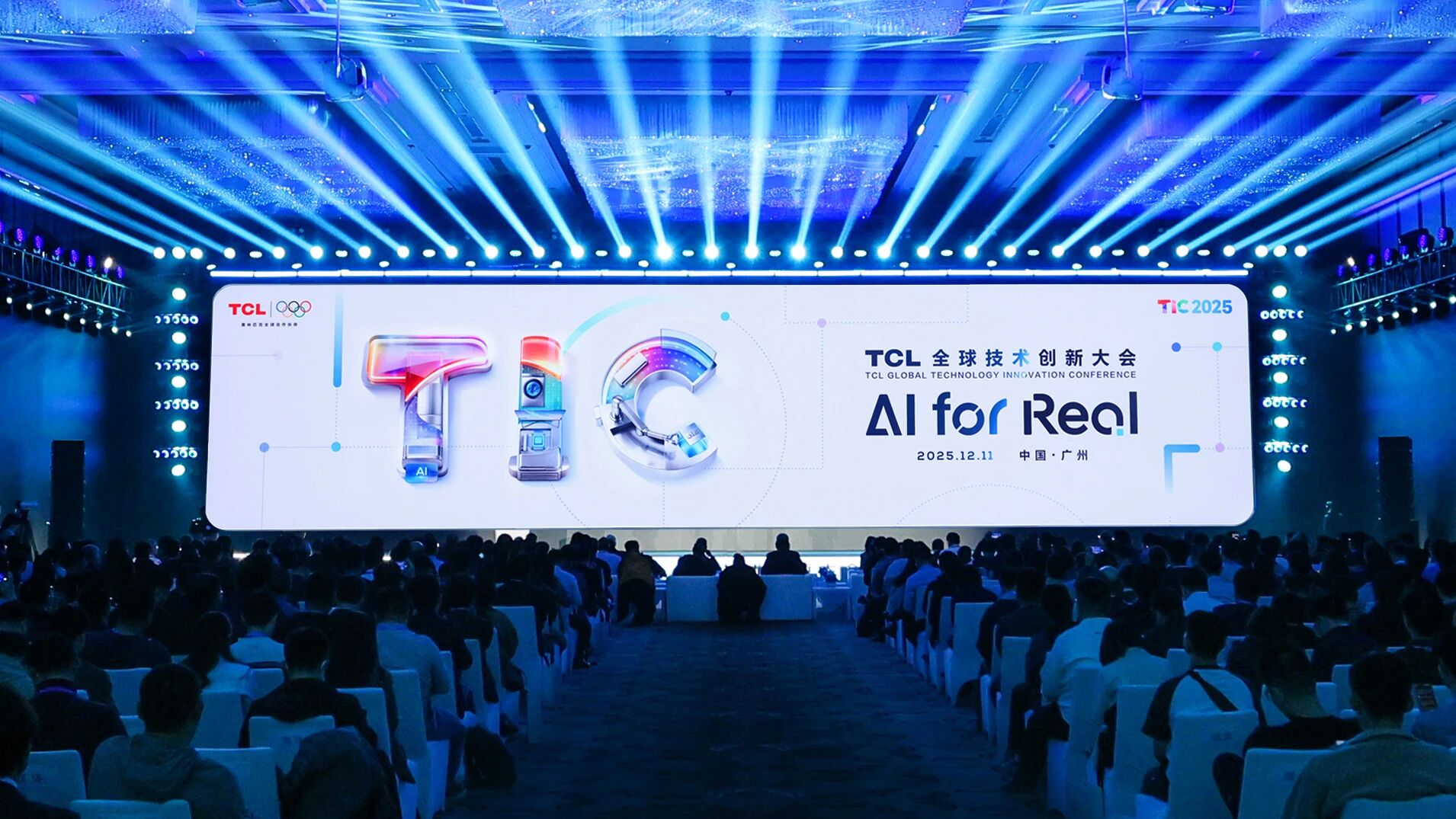
In B2B sectors, discussions centred on how AI can drive technological accessibility through quality enhancement and efficiency improvement. In B2C markets, the focus was enhancing user experiences across mobility, health, renewable energy, entertainment, and intelligent companionship.
During the event, TCL unveiled ten AI application scenarios, launched its Global AI Talent Recruitment Initiative, and shared insights on cutting-edge AI applications including large multimodal models, AI-enabled display material development, embodied intelligence, and digital twins.
TCL also announced that it expects to generate over 1 billion yuan ($142M USD) in comprehensive benefits in 2025 through advancing AI implementation.
TCL’s “AI for Real” Model and Its Global Impact
As global competition in AI intensifies, the focus has largely remained on modelling parameters and expansion of computational infrastructure. AI often remains confined to the technical layer without sufficient application-level implementation, restricting its ability to deliver meaningful real-world value and benefit to the society.
Unlike the global rush in AI infrastructure investment and large-model competition, TCL focuses on an “AI for Real” model, prioritising the integration of AI into practical real life applications. This strategy shifts AI beyond theory toward scenario-based implementations and applications, delivering tangible and measurable value.
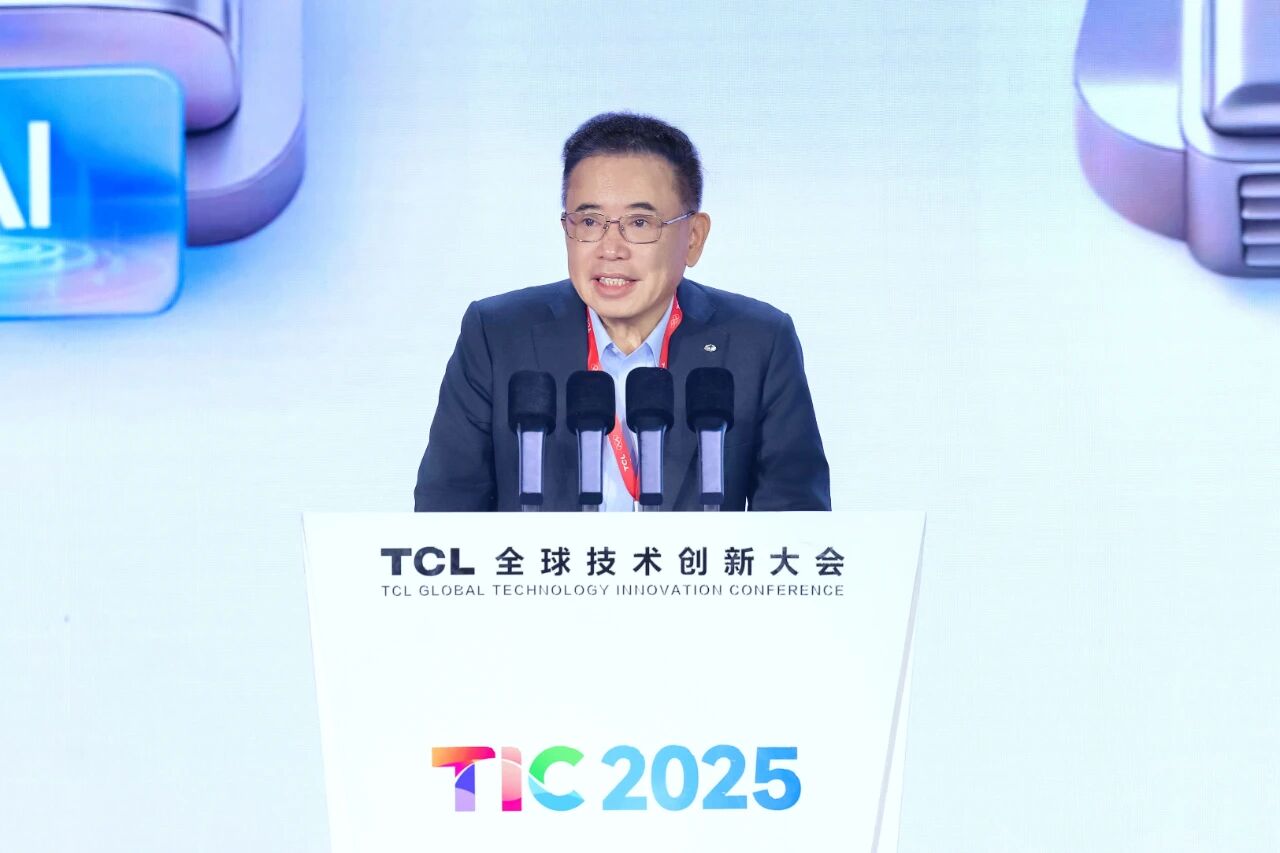
Li Dongsheng, Founder and Chairman of TCL, stated at the conference: “TCL continues to increase investment in AI technology, driving innovation across the entire process, from R&D and manufacturing to supply chain and operations - to achieve large-scale value.”
Advancing AI in Semiconductor Displays and Manufacturing
At the conference, TCLHuaxing unveiled the world's first semiconductor display large model, Xingzhi Star X-Intelligence 3.0. This is the first vertical-domain large model in the global display industry with strong reasoning capabilities. It features a more comprehensive knowledge system, enhanced learning efficiency and improved adaptability. The model supports private deployment and is able to read and interpret technical papers and data across the global display industry.
This model is expected to evolve into the “most powerful brain” for semiconductor display R&D and manufacturing, setting a new benchmark for intelligent manufacturing transformation in China.
Wang Cheng, Chief Operating Officer of TCL Technology, highlighted the practical importance of AI implementation, stating:
“The ultimate significance of AI lies not in the accumulation of concepts, but in the implementation of scenarios and the creation of value. This conference, themed ‘AI for Real’ aims to bring industry partners together to collaborate and explore how to transition from ‘technology’ to ‘scenarios,’ creating tangible, measurable, and sustainable value in every manufacturing process, every product, and every service.”
TCL actively promotes the implementation of AI across multiple domains and scenarios in both B2B and B2C sectors, empowering R&D, manufacturing, supply chains, and end-user experiences. Currently, through its two industrial groups, TCL Industries and TCL Technology, the company operates across three major sectors: smart terminals, semiconductor displays, and photovoltaics. Its extensive and deep industrial manufacturing capabilities provides a strong foundation for diversified AI application.
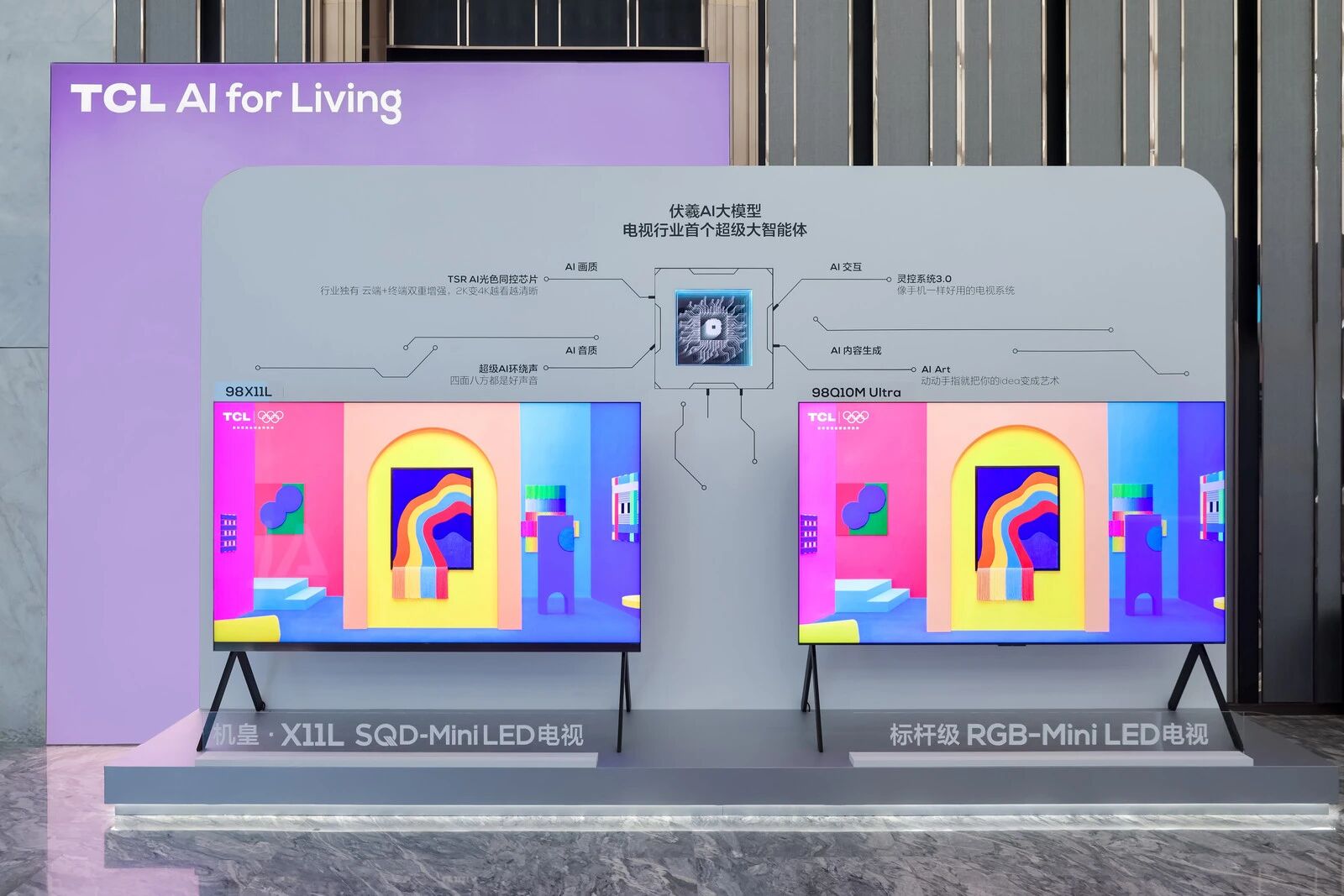
AI-Empowered Manufacturing: Driving Quality, Efficiency and Inclusion Across All Scenarios
Within B2B sectors, TCL has fully integrated AI into semiconductor display and photovoltaic industries, delivering significant improvements in quality and efficiency across manufacturing, R&D, and operations. These advancements ultimately elevate the core value of end products for consumers.
As the most powerful model in the semiconductor display sector, the Star Intelligence Large Model ranked 11th globally and 1st in the display sector in the 2025 Industrial Large Model rankings. Its capabilities in semiconductor display applications have surpassed DeepSeek R1-671B, improving product issue analysis efficiency by 20% and material development efficiency by 30%. Furthermore, it plays an active role in training new employees and resolving customer issues, through established mature application practices such as “tailored instruction” and “remote troubleshooting.”
AI Innovation in Photovoltaics and Renewable Energy
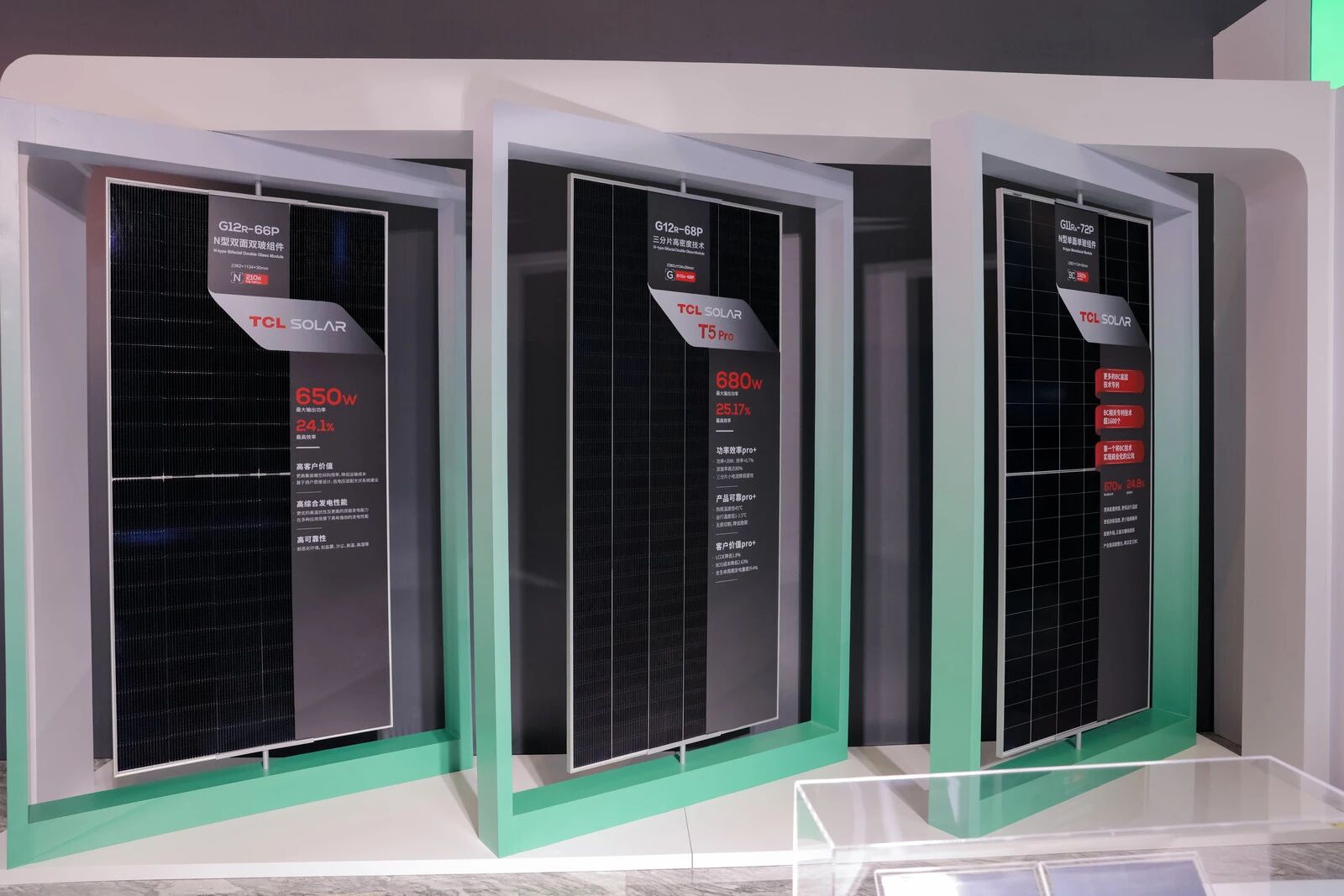
AI is also being applied extensively in photovoltaics manufacturing. During ingot manufacturing process, TCL Zhonghuan uses the DeepBlue AI model to automate its monocrystalline furnaces, enabling human-machine collaboration. Utilising digital twins technology and a big data analysis system, a single operator can remotely manage up to 384 furnaces. During the wafer production stage, the company has streamlined production with automated silicon wafer cutting and intelligent, contact-free packaging lines, reducing wafer breakage rates to less than 0.1%.
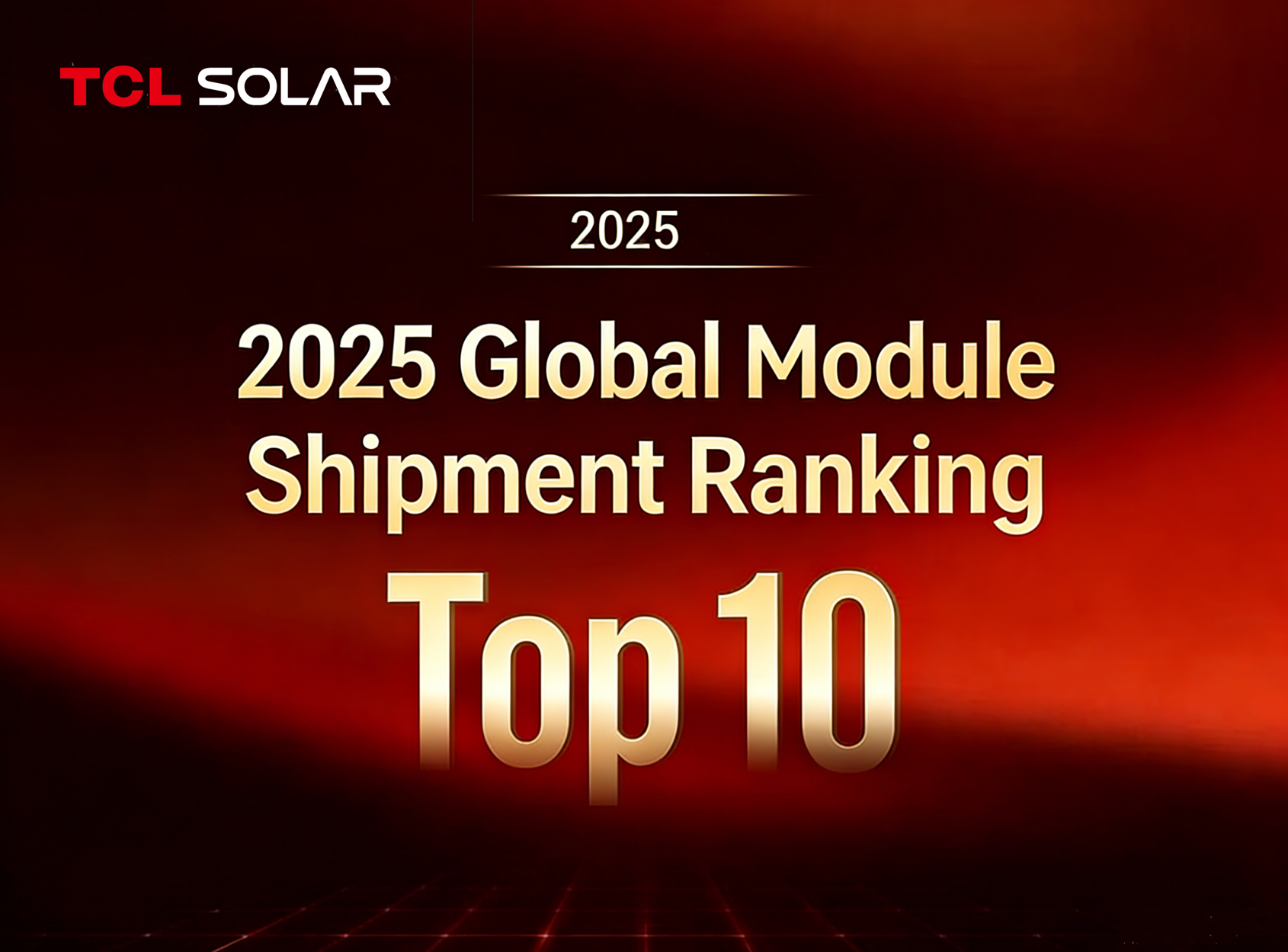
With AI support, TCL Zhonghuan continues to advance the adoption of G12 large-size wafers while accelerating the diversification of technical routes including Back Contact, TOPCon, and TOPCon shingled solar technologies. TCL solar modules are deployed in photovoltaic projects across more than 60 countries, supplying electricity to tens of millions of people around the world and supporting the global transition to a greener energy system.
In industrial AI sector, GeChuang DongZhi, TCL's industrial intelligence leader, is expected to leverage practical experience gained from over 150 AI projects by the end of 2025. These projects span across quality control, energy management, and logistics automation. It addresses key challenges in AI-industrial integration, such as data silos and fragmented demands, through a dual-engine approach combining “system integration” and “algorithm innovation”. This is supported by holistic planning, intelligent workflows, and human-machine collaboration, driving the evolution from system integration to full intelligence.
The deep integration of AI, industrial software, intelligent equipment, manufacturing scenarios, and industry know-how is pivotal to the successful implementation of industrial AI. Together, these elements establish an intelligent decision-making foundation for China's advanced manufacturing sector.
Looking ahead, TCL will continue to actively support the “AI+” initiative, focusing on original and disruptive technological innovation. With smart manufacturing as its primary focus and implementation scenario, TCL aims to transform AI into tangible productivity, shaping new drivers for sustainable development.
TCL Zhonghuan, 12 December 2025