Beyond Daylight Hours: How Storage Is Changing Off-Grid Solar Water Pumping
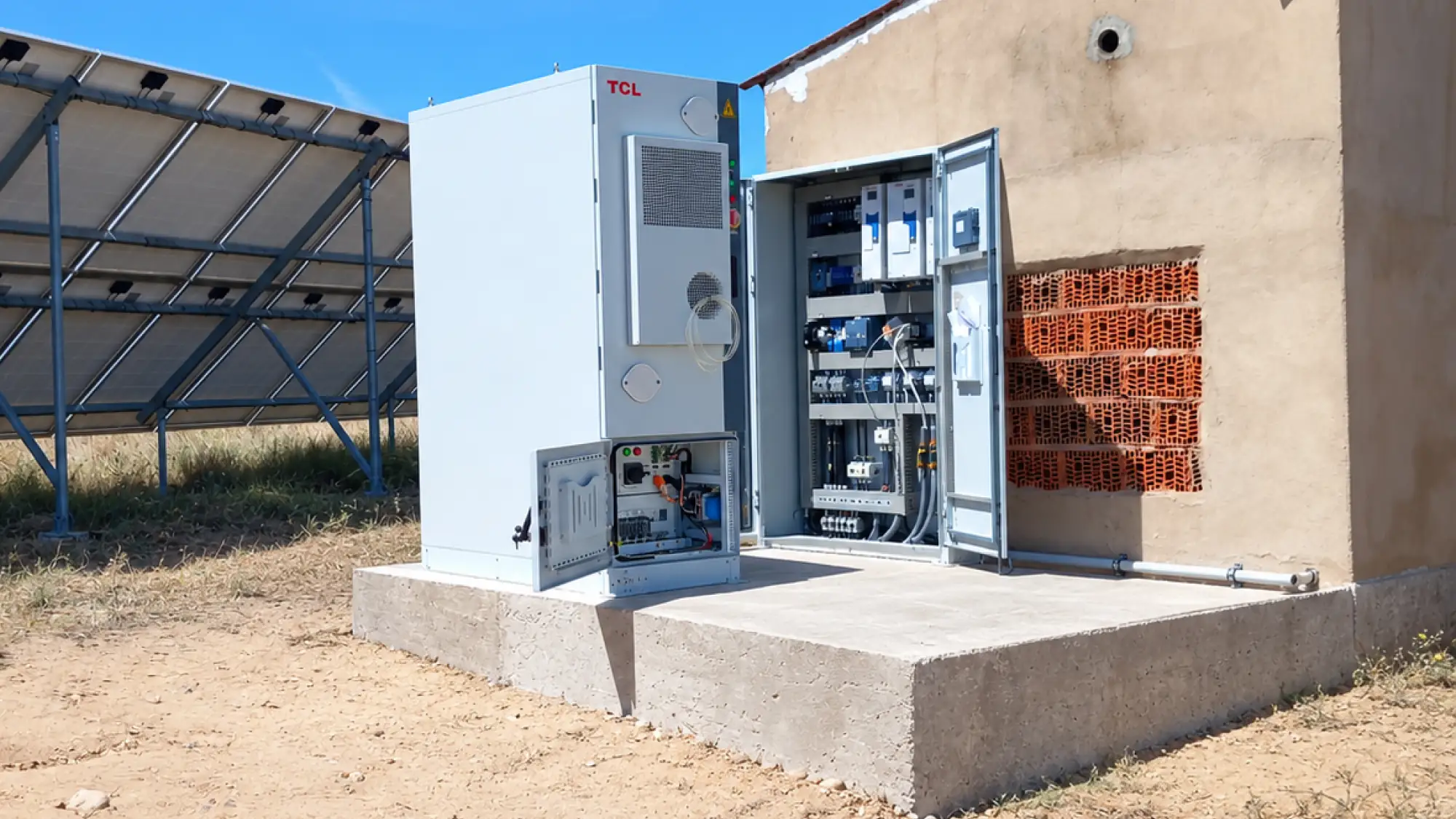
At an off-grid borehole serving a 2,500-sow farm in Burgos, Electricidad EUFON used the TCL X5 to turn an existing direct solar pumping installation into a hybrid energy system. The upgrade retained the 34.56 kWp photovoltaic array, added 100 kWh of storage and introduced real-time control over critical water infrastructure.
At Agroalimentaria Chico’s breeding farm in Burgos, water begins its journey around three kilometres from the animals that depend on it. A remote borehole supplies a 60,000-litre buffer tank, from which water is pumped to larger tanks at the farm. There is no electricity grid at the source.
That makes pumping a business-critical process. Water supports animal hydration, washing, disinfection and cooling during the hottest months. The farm tanks hold approximately four days of supply, creating a useful buffer but not eliminating the risk of a fault at a site that is both remote and off-grid.
The facility belongs to Agroalimentaria Chico, a Spanish family-owned group with a history dating back to 1965. Its operations currently involve approximately 17,000 white-coat and Iberian breeding sows, over 100 integrated finishing farms, and an annual production exceeding 400,000 animals. The TCL X5 project was developed for SAT Hnos. Chico at one of the company's own farms managed by Genética El Bardal S.A.U.
Why direct solar pumping was no longer enough
EUFON first addressed the absence of grid power in 2015 by installing a 34.56 kWp photovoltaic array and a direct solar pumping system. Two 7.5 kW pumps extracted water from the borehole and transferred it from the buffer tank to the farm.
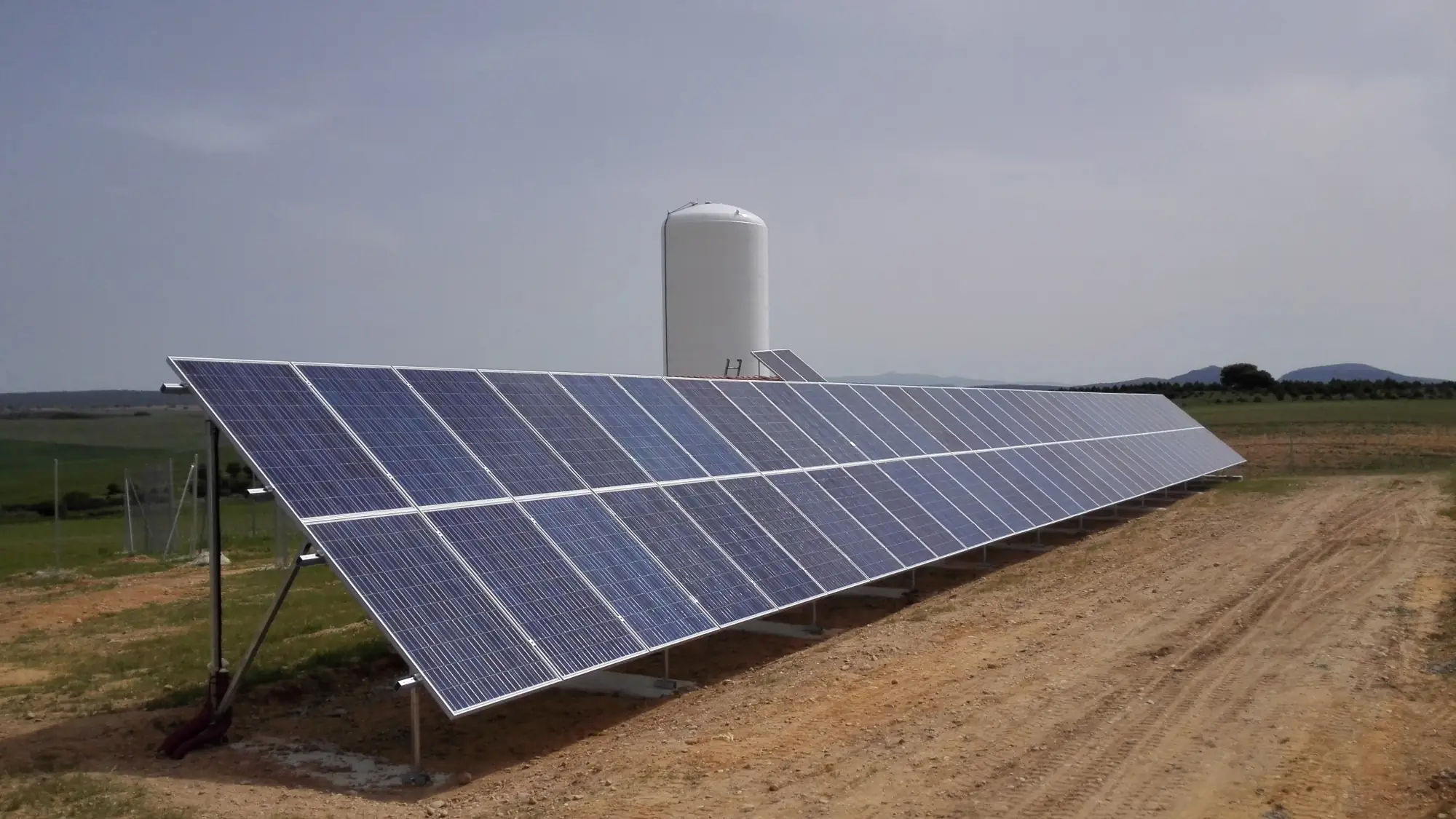
The original architecture was economical and effective, but it was designed around daylight. Solar generation was converted directly into power for the pumps, so pumping speed rose and fell with irradiance. Energy above the immediate load could not be stored. After sunset, or whenever solar production was insufficient, the farm depended on a manually operated diesel generator.
Over the following decade, the farm grew to its current scale. The original borehole also aged and experienced minor ground movement. By 2026, the customer needed a second borehole with a 9 kW pump, as well as faster fault detection, less manual intervention and lower reliance on diesel.
A TCL X5 battery storage retrofit without adding solar panels
The conventional response would have been to expand the photovoltaic array and add another direct pumping controller. EUFON proposed a different route: keep the solar asset already in place and add battery storage so that more of its output could become usable energy.
The installed TCL X5 commercial and industrial battery storage system combines 50 kW rated AC output with 100 kWh of lithium iron phosphate battery storage in an integrated cabinet. Designed for grid-connected and off-grid operation, it also provides a dedicated generator input. At the Burgos site, those capabilities allowed EUFON to connect the existing 34.56 kWp array, retain the diesel generator as backup and avoid an immediate expansion of the solar field.
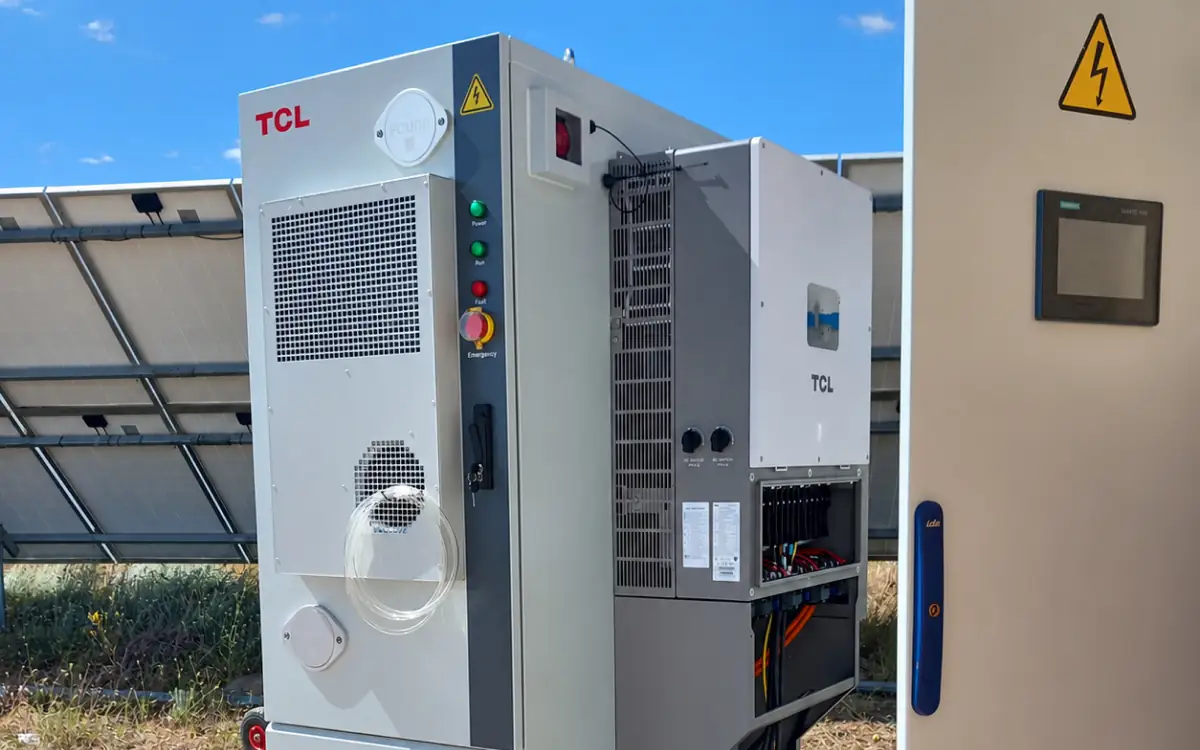
Storage did more than add capacity. It changed when the existing solar energy could be used. Surplus generation could now be held and released later, turning a resource that had to be consumed instantly into dispatchable energy for the pumping process.
The active pump load is approximately 15 to 16.5 kW, depending on which borehole pump is operating. The 50 kW inverter therefore leaves headroom for future load growth. The X5 began operating on 11 June 2026, while the wider electrical and automation works continued until 27 July.
Storage, automation and remote monitoring as one system
Battery storage solved the timing constraint. EUFON’s engineering addressed the process itself. The installer rebuilt the electrical system around three variable-frequency drives and a programmable logic controller.
The two borehole pumps, rated at 7.5 kW and 9 kW, alternate rather than running at the same time. A separate 7.5 kW transfer pump moves water from the buffer tank to the farm. Level sensors initiate and stop pumping, while the PLC coordinates the sequence around water demand and available energy.
EUFON connected its controls to the TCL X5 through Modbus. Battery status can therefore inform the decision to start or delay a pumping cycle. Mobile alerts notify the customer of component faults, while remote access allows some interventions to be made without an immediate journey to the borehole.
“The TCL X5 enabled us to reconfigure the existing direct solar pumping installation as a hybrid system without expanding the photovoltaic array. Solar energy that previously went unused can now be stored and used to keep the pumps operating at full power through changes in irradiance and beyond sunset. Its off-grid capability, integrated generator input and flexible communications also allowed us to connect EUFON’s own automation and controls around it. The result is a more flexible system with less reliance on diesel and room to expand.”
Adolfo Bartolomé Redondo Head of Renewable Energy at Electricidad EUFON
Early results: pumping through clouds and beyond sunset
Monitoring from 1 to 3 September 2026 provides an early view of the new operating model. During the day, the photovoltaic array supplied the pumps and charged the battery whenever generation exceeded the immediate load. When cloud cover reduced solar output, the battery discharged to maintain pumping at approximately 15 kW. Stored energy then extended operation beyond sunset. The generator did not start during the three-day period.
The customer also reports that the first summer passed without an incident and that the generator was not needed under summer operating conditions. When a fault does occur, the team can now identify it sooner and respond from a mobile phone in situations that previously required a site visit.
These first months do not yet establish annual diesel savings. The installation has operated mainly through the higher-irradiance summer period, while winter will provide a more demanding test. Pumping hours and water demand have also remained broadly comparable because animal numbers were stable over the latest year. The meaningful early result is operational: the same water requirement can be served with better use of the existing solar array, greater visibility and less generator reliance under summer conditions.
“Water is critical to the farm. The well is three kilometres away, so detecting a problem late used to leave us with very little margin. We can now see what is happening in real time and respond from a mobile phone. The first summer has been incident-free, and the generator has not been needed under summer operating conditions. Our goal is to secure water availability 365 days a year with less dependence on diesel.”
Víctor Marina General Manager SAT Hnos. Chico
Water resilience supports animal welfare
The link between the energy system and animal welfare is direct and practical. Reliable water availability supports hydration, cleaning, disinfection and temperature management during hot weather. Better visibility and greater pumping resilience therefore strengthen a basic operating condition for the care of the animals.
The project also supports Agroalimentaria Chico’s wider commitment to sustainable pork production, process innovation and animal welfare. Lower generator use should reduce diesel consumption, associated emissions and fuel deliveries to the remote site. Those environmental benefits will be quantified only after a representative operating period is available.
An early reference to the TCL X5 in Europe
For TCL SunPower Global, the installation is an early European field reference for the X5 in the type of small commercial and industrial application it was designed to address. The site brings together an existing photovoltaic asset, a critical off-grid load, generator backup and a requirement for local process control.
It shows how energy storage can add a new operating layer to an existing solar installation without forcing the customer to replace working equipment or automatically add more panels. The X5 manages the solar, battery and generator energy pathways; EUFON translates those capabilities into a pumping strategy tailored to the site, using variable-speed drives, level sensors, pump sequencing and remote alarms.
That combination of product capability and partner engineering is relevant beyond agriculture. Many small commercial sites have existing solar generation, critical loads and backup power, but limited control over when the energy can be used. Storage can turn those separate components into a more flexible operating system.
The installed 50 kW/100 kWh configuration also leaves room for the farm to add photovoltaic capacity or storage later. Across the wider TCL X5 platform, battery capacity can be expanded and multiple cabinets can operate in parallel as a customer’s requirements increase.
The next proof point will come in winter
EUFON and Agroalimentaria Chico will use the first winter and a full year of operation to assess generator starts, runtime and diesel consumption against comparable conditions. The customer’s success criteria are already clear: dependable water availability throughout the year, earlier warning of faults, fewer manual interventions and progressively lower generator dependence.
The first months cannot answer every performance question. They do show the change in architecture. Solar generation that once had to be consumed immediately can now be stored, controlled and used when the business needs it. That is the operational shift the TCL X5 was introduced to deliver.
Frequently asked questions
Find answers to common questions about off-grid solar pumping with battery storage.
Download the FAQs (PDF)